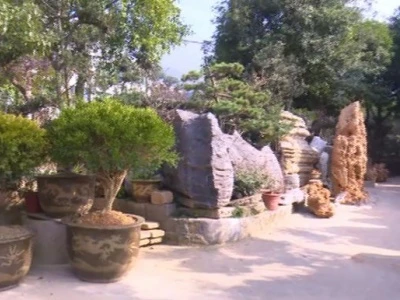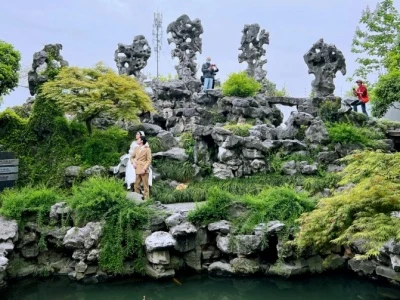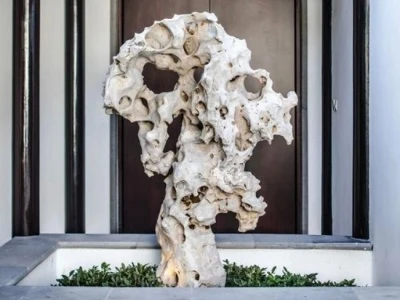
The history of using Taihu stones is long and profound, dating back as early as the late Spring and Autumn period-some 2,500 years ago. When King Fuchai of Wu constructed a royal garden on Lingyan Mountain in Suzhou for the legendary beauty Xi Shi, he incorporated Taihu stones; this constitutes one of the earliest documented instances of their use. By the Sui and Tang dynasties, the use of Taihu stones had become even more widespread, and from the Song dynasty onward, they came to be regarded as the very essence of garden design. However, during the feudal era, Taihu stones were primarily objects of leisure and appreciation for emperors, aristocrats, and high-ranking officials. To beautify their courtyards and construct their private estates, these elites forcibly conscripted the laboring masses to quarry and transport the stones-a practice that inflicted untold suffering upon the common people.
Although the "Huashigang" (Flower and Stone Tribute) incident occurred over eight centuries ago, the surviving Taihu stones from that era remain scattered across numerous gardens in various regions. Notable examples-all popularly believed to be relics of the Huashigang tribute-include the *Yulinglong* (Exquisite Jade) in Shanghai's Yu Garden; the *Ruiyunfeng* (Auspicious Cloud Peak) at Suzhou No. 10 Middle School and the *Guanyunfeng* (Crowned Cloud Peak) at the Lingering Garden; the "Remnant Stone of the Southern Garden" at the Yangzhou Museum; and the *Xianrenfeng* (Immortal's Peak) at the Zhan Garden in Nanjing. Furthermore, the *Laorenshi* (Old Man Stone) in Beijing's Summer Palace, along with several other renowned Taihu stones found in Beihai Park and Zhongshan Park, are also largely believed to be remnants of the Huashigang tribute originally destined for the "Genyue" Imperial Garden in Kaifeng during the Northern Song dynasty; these stones were subsequently transported to Beijing following the rise of the Jin dynasty.