Jiangsu Taihu Stone
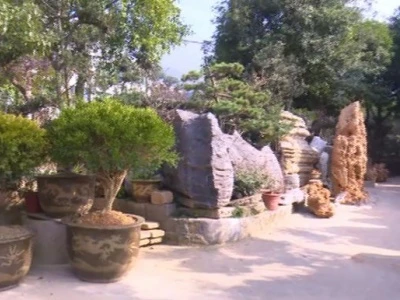
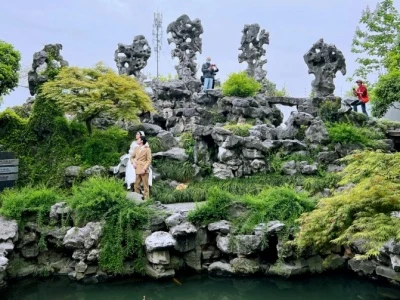
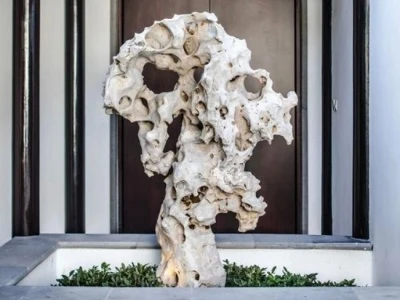
Jiangsu Taihu Stone refers to stones originating from Lake Taihu in Jiangsu Province. Characterized by their abundance of perforations and intricate, convoluted textures, these stones are used to construct artificial rockeries and to adorn gardens, courtyards, and other cultural landscapes. As the ancients observed: "Scattered yet towering, a verdant pile of jade; peaks rise in unison like the Palm of the Immortal, while fissures split open like the Sword Gate." Such verses transport us into the poetic realm evoked by this legendary stone, renowned throughout the ages.
Anhui Taihu Stone
Anhui Taihu Stone refers to the stones sourced from the Taihu Stone production base in Anhui Province. Taihu County is situated in the southwestern part of Anhui Province, nestled at the southern foot of the Dabie Mountains and along the northern bank of the Yangtze River. To the east, it faces Mount Tianzhu; to the south, it stands in scenic dialogue with Mount Lu; and geographically, it occupies a prime location along the major tourist route of the middle and lower reaches of the Yangtze River.
Fangshan Taihu Stone
Fangshan Taihu Stone-also known as "Northern Taihu Stone"-is quarried in the Zhoukoudian region of Fangshan District, Beijing. Composed of limestone, this stone generally resembles its southern counterpart in form, exhibiting the characteristic variations of Taihu Stone: swirling patterns, deep grooves, circular apertures, and cavernous hollows.
Zhejiang Taihu Stone
Zhejiang Taihu Stone refers specifically to the stones produced in the Zhejiang portion of the Lake Taihu region, which accounts for 10% of the lake's total surface area. Characterized by the four aesthetic qualities of "transparency, slenderness, perforation, and convolution," it is an indispensable material for landscaping, scenic design, and environmental beautification within traditional Chinese gardens. Furthermore, it ranks as one of my country's four most celebrated ornamental stones of antiquity-alongside Ying Stone, Lingbi Stone, and Kun Stone-and derives its name from its place of origin: Lake Taihu.