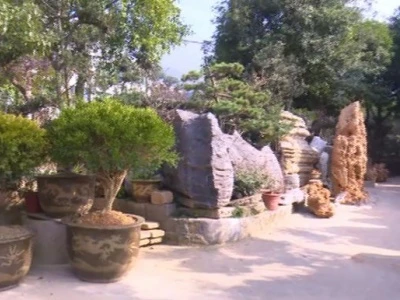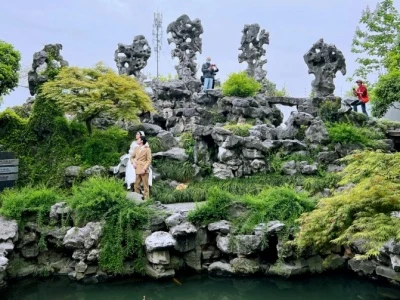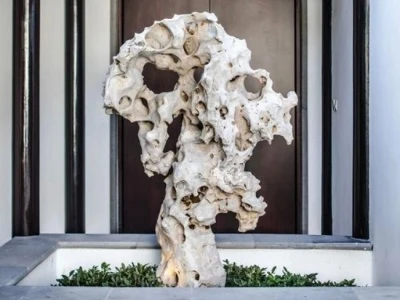
As a pivotal medium within Chinese ornamental stone culture, Taihu stones possess a long and profound cultural heritage. Their historical origins can be traced back to the Xia Dynasty; indeed, they were already renowned over a thousand years ago during the Tang Dynasty and served as the primary landscaping stones for imperial gardens throughout the ages. From refined literati to emperors and nobility, all held a special fondness for these stones, thereby fostering a unique tradition of stone appreciation.
In his *Record of Taihu Stones* (*Taihu Shi Ji*), Bai Juyi articulated key criteria for stone appreciation-including "ugliness," form, texture, and momentum-and famously described Taihu stones as "condensed landscapes," providing essential guidance for future generations of stone connoisseurs. During the Song Dynasty, the vogue for stone appreciation reached even greater heights; the renowned calligrapher and painter Mi Fu went so far as to bow down and address a stone as his "elder brother," while also formulating the aesthetic principles of "leanness, wrinkling, openness, and transparency"-criteria that remain the standard for evaluating garden stones to this day. Emperor Huizong of Song (Zhao Ji) engaged in the large-scale collection of Taihu stones, transporting them to the capital, Bianjing, to construct artificial rockeries; he even bestowed the noble title of "Marquis Pangu" upon a colossal Taihu stone, vividly demonstrating his deep obsession with these natural wonders.
Throughout history, a cultural trend prevailed among literati and scholars-one of planting, admiring, collecting, and composing poetry about stones, as well as using them as a means to forge friendships-leaving behind a countless legacy of poems, lyrics, songs, and rhapsodies. During the Ming Dynasty, the high official Mi Wanzhong penned *The Record of the Great Stone* (*Da Shi Ji*) after an unsuccessful attempt to transport a massive stone; later, during the Qing Dynasty, the Qianlong Emperor successfully transported this very stone to the Summer Palace, christened it "Qing Zhi Xiu" (The Azure Crag), and composed poems and essays in its honor. Furthermore, the celebrated novelist Cao Xueqin drew inspiration from the symbolism of stones to create his timeless masterpiece, *Dream of the Red Chamber*. In the modern and contemporary eras, artistic luminaries such as Shen Junru, Zhang Daqian, and Xu Beihong have likewise distinguished themselves as avid connoisseurs of ornamental stones. Guo Moruo once lauded these stones for embodying qualities of "serenity, clarity, solidity, and selflessness," thereby eloquently articulating the noble character inherent in these natural objects. Today, amidst the enrichment of cultural life, Taihu stones have found their way into an ever-wider array of settings-including public gardens, university campuses, and residential communities-offering people a refined form of spiritual enjoyment while ensuring the continued legacy and transmission of the profound cultural significance they embody.