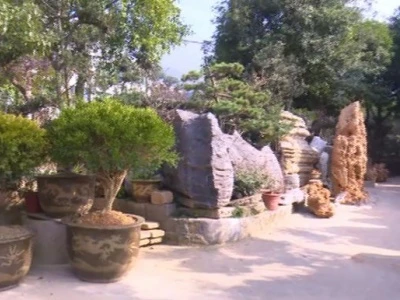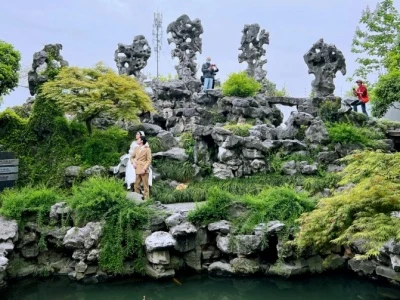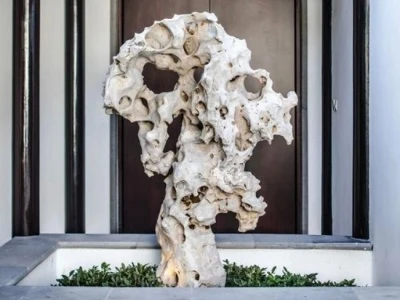
The Taihu stone is a work of art that seamlessly blends classical aesthetics with modern sensibilities. It consists of two distinct components: the upper Taihu stone-clear, translucent, and revealing a unique texture and beauty-and the lower basin crafted from bluestone, which features a rustic yet elegant form that evokes a sense of grounded stability without sacrificing grace. Viewed from various angles, this artwork inspires in the beholder a profound appreciation for the spirit of Zen, imparting a sense of beauty that is both fresh and transcendent.
As the foremost among the "Four Famous Stones of Antiquity," the Taihu stone boasts a long and storied history. Its form is rugged yet rounded, majestic and powerful, characterized by bold, minimalist lines. The craggy peaks and contours of a Taihu stone possess a magical quality, capable of achieving the effect wherein "a single peak encapsulates the splendor of a thousand cliffs." In his *Record of the Taihu Stone*, the renowned poet Bai Juyi observed that these exotic stones represent a form of miniature landscape art-a medium through which one may wander in imagination to attain a state of "perfect contentment." He wrote: "To summarize the essence: the Three Mountains and Five Great Peaks, the hundred caves and thousand ravines-all are intricately gathered and condensed within. A hundred-fathom precipice is reduced to the size of a clenched fist; a journey of a thousand miles unfolds in the blink of an eye-all to be experienced while seated in repose."
This Taihu stone artwork not only showcases the unique allure of the stone itself but also embodies the ancients' enduring pursuit of beauty and their deep reverence for the natural world. Whether judged by its artistic merit or its historical significance, it stands as a rare and invaluable treasure.