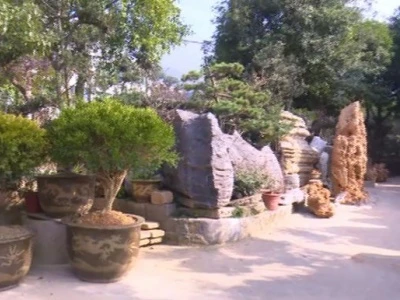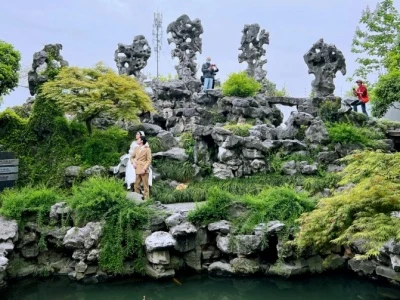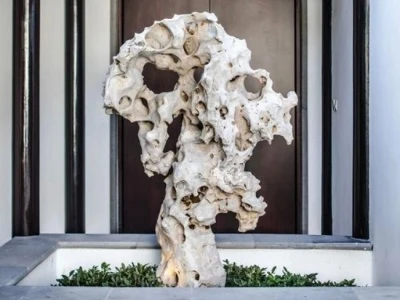
The physicochemical properties of Taihu stones are intimately linked to their formation processes and chemical composition. Composed primarily of limestone-specifically calcium carbonate-these stones are highly susceptible to dissolution by water containing carbon dioxide. Over the course of vast geological epochs, through the combined forces of wave impact and chemical dissolution, they gradually evolve into their distinctive forms-characterized by slenderness, convolutions, perforations, and translucence, as well as sinuous contours and rounded surfaces-thereby exemplifying their salient chemical characteristics.
Fundamentally, the geographical origins of Taihu stones share a distinct commonality: wherever limestone deposits exist-and where the terrain has undergone prolonged aqueous erosion (including the erosive and corrosive actions of lake water, river water, or groundwater)-the formation of Taihu stones is a distinct possibility. This is because limestone's primary constituent, calcium carbonate, readily undergoes chemical reactions with water and carbon dioxide, leading to its dissolution; over the span of extensive geological time, this process yields stone specimens possessing the unique morphologies and defining attributes characteristic of Taihu stones. This inherent characteristic accounts for the relatively widespread distribution of Taihu stone sources; indeed, any locality that satisfies the aforementioned geological prerequisites has the potential to serve as a site for the production of Taihu stones.