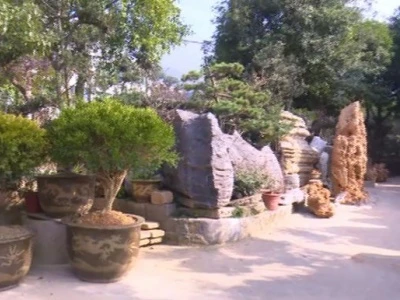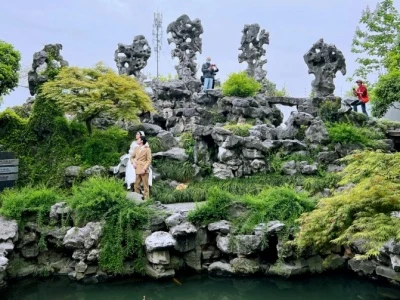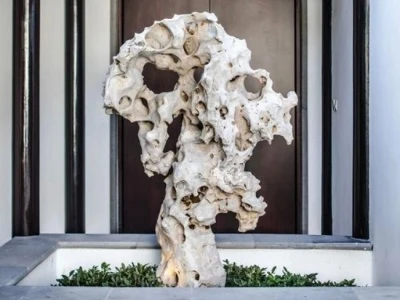
Due to its unique textures and forms, Ying Stone has become an indispensable element in traditional Chinese gardens. Originating in Yingde, Guangdong, this type of rock undergoes natural weathering to develop a myriad of intricate cavities and shapes, making it particularly well-suited for crafting rockeries and bonsai landscapes. In the gardens of Suzhou and the courtyards of the Lingnan region, landscapes constructed from stacked Ying Stone are a common sight; they serve not only to delineate space but also to evoke a sense of wild, natural charm.
A Stalwart of Architectural Decoration
From antiquity to the present day, Ying Stone has consistently served as a premium architectural material:
Wall Decoration: When cut into thin slices, Ying Stone serves as an excellent "cultural stone" veneer.
Ground Paving: Its inherent durability and wear resistance make it an ideal choice for paving garden pathways.
Functional Components: Traditional architecture frequently features stone railings and benches crafted from Ying Stone.
Its distinctive bluish-grey hue blends seamlessly with modern architectural aesthetics, a quality that has led to its growing popularity among designers in recent years.
A Medium for Cultural and Artistic Expression
Connoisseurs and literati have long recognized and appreciated the subtle virtues of Ying Stone:
Inkstones: The fine, dense texture of Ying Stone makes it highly suitable for carving into inkstones.
Decorative Objects: Naturally formed pieces of Ying Stone can be displayed directly as elegant desktop ornaments.
Seals: Certain varieties of Ying Stone possess a moderate hardness, making them an excellent medium for seal carving.
These culturally rich artifacts elevate the value of Ying Stone far beyond that of ordinary stone materials.