According to research conducted by experts from the former Geological Team 706 of the Guangdong Provincial Bureau of Geology and Mineral Resources, prior to the Lower Paleozoic era, the Yingde region featured sedimentary strata consisting solely of the Sinian and Cambrian systems; much like the majority of northern Guangdong, it lacked strata from the Ordovician and Silurian systems. Following a considerably long period of erosion, a marine transgression-moving from the southwest toward the northeast-began in the Middle Devonian epoch (approximately 380 million years ago). It was only then that the Yingde region began to accumulate sediments; the sequence, spanning from the Middle Devonian Qizhiqiao Formation to the Middle-Upper Carboniferous Hutian Group, is characterized predominantly by shallow-marine facies, with localized occurrences of reef-facies carbonate structures. As the Earth's crust subsequently uplifted, the Yingde region emerged as dry land, leaving extensive deposits of limestone distributed across a vast area.
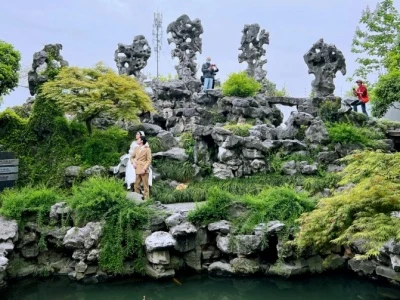
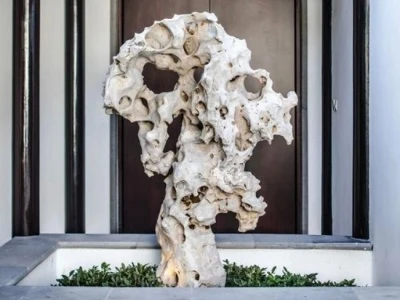
Endowed with unique geographical and climatic characteristics-situated in the humid, subtropical south with abundant rainfall, ample groundwater recharge, and high temperatures-the Yingde region possesses highly favorable conditions for karst formation. Furthermore, the proliferation of bacteria and plant photosynthesis within the environment facilitate the decomposition of organic matter, thereby releasing substantial quantities of carbon dioxide. Over the course of a vast geological history, groundwater (and surface water) rich in carbon dioxide flowed through the pores and across the surfaces of the limestone bedrock. This water chemically dissolved the limestone, converting the calcium carbonate (CaCO3) within the rock into soluble calcium bicarbonate [Ca(HCO3)2], which was then carried away. This dissolution process gradually enlarged the internal pores of the limestone; simultaneously, the original limestone land surface underwent extensive erosion and localized collapse, giving rise to the distinctive formations known as Ying Stone. Due to inherent variations in the chemical composition, structural integrity, and fracture patterns of the limestone across different locations, the intensity of this dissolution and collapse varied significantly from place to place-even from point to point. Consequently, Ying Stone has evolved into a myriad of forms-delicate and translucent, majestic and rugged-embodying the four classic aesthetic qualities: "leanness, wrinkling, openness, and transparency."